fbpx
Play video

Let’s bring colour into the Light

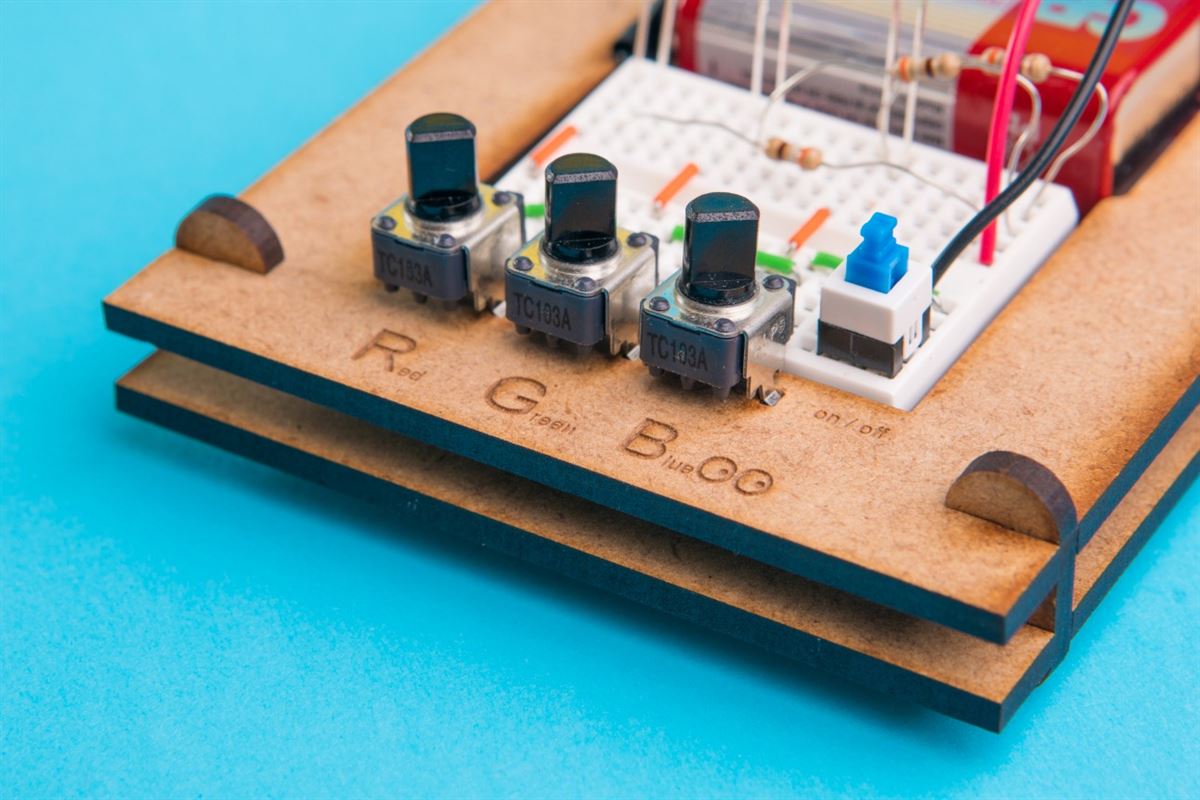
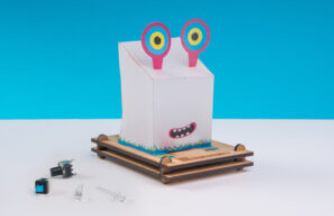
In the RGB Lamp project, young inventors will explore the world of electronics

This experience allows children to learn important scientific concepts, previously explored by a pioneer of science, in a practical and enjoyable context. It encourages them to explore the world around them with an inventive mindset and reflects the mission of inspiring future inventors and innovators to think outside the box and apply their knowledge in creative ways

About Inspiring Inventors

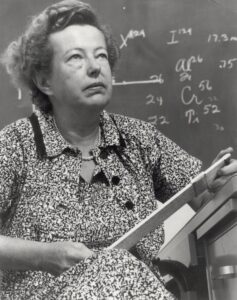
Maria Goeppert-Mayer

Maria Goeppert-Mayer

1906-1972

Was a German–American theoretical physicist who shared the 1963 Nobel Prize in Physics with J. Hans D. Jensen and Eugene Wigner. One half of the prize was awarded jointly to Goeppert-Mayer and Jensen “for their discoveries concerning nuclear shell structure”. She was the second woman to win a Nobel Prize in Physics, the first being Marie Curie in 1903. In 1986, the Maria Goeppert-Mayer Award for early-career women physicists was established in her honor. Goeppert-Mayer wrote her doctoral thesis on the theory of possible two-photon absorption by atoms. At the time, the chances of experimentally verifying her thesis seemed remote, but the development of the laser in the 1960s later permitted this. Today, the unit for the two-photon absorption cross section is called the Goeppert-Mayer (GM) unit.

Ask Maria Goeppert-Mayer

The IA version of Maria Goeppert-Mayer answer your questions

This dialogue box uses artificial intelligence and is configured to respond exclusively to questions related to the project, its concepts and associated fields, as well as queries and curiosities about the history of each inventor. Questions outside this scope may not be answered. Always use under adult supervision.

Thank you for your understanding.


Concepts covered

RGB

  • RGB:  Is the acronym that represents the system of primary colours of light — Red, Green, Blue. The combination of these three colours results in white and the absence of the three in black. The system was used on television screens and Polaroid cameras, inspiring the current standards used in smartphones, TVs and computer monitors.

Resistors and LEDs

  • Resistors: Used to regulate the flow of electric current. They work like a «faucet», allowing us to
    regulate the current flowing through the circuit — we can increase or decrease the light in a
    lamp or the speed of a fan and, eventually, turn them off.
  • LEDs: Are electronic components (semiconductor diodes) that transform electrical energy into
    light energy. The colour of the emitted light depends on the material it is made of. They have
    been increasingly used due to their

Why This Project?

The RGB Lamp project was created with three main objectives:

  1. Understanding the importance of concepts: By assembling and operating the RGB Lamp, students learn about concepts like electronics, RGB, Resistors and LEDs.
  2. Explaining the relevance on nowadays: Explain to the young inventors that the concepts behind the RGB Lamp project are connected to our everyday lives, with computers, smartphones, televisions, traffic lights, medical equipment, and energy control!
  3. Focus in Creativity and an Inventive Spirit: By taking part in this  process, children develop skills such as problem-solving, critical thinking, and motor coordination.

At the end of the session, in addition to building a RGB Lamp , the young inventors will also gain a new appreciation for the world of Electronics

Let’s light the imagination – together!

Challenges for you

Ask your young inventor what excited them most about the session, or challenge them to use the RGB Lamp at home with the family!

For the boldest ones, why not share your experience with us, so we can share it on our social media?

Link para o Instagram


Together, let’s demonstrate that creativity is full of colour.