fbpx
Play video

Three-dimensional fun!

The 3D Puzzle project allows children to explore the fascinating world of three-dimensionality.

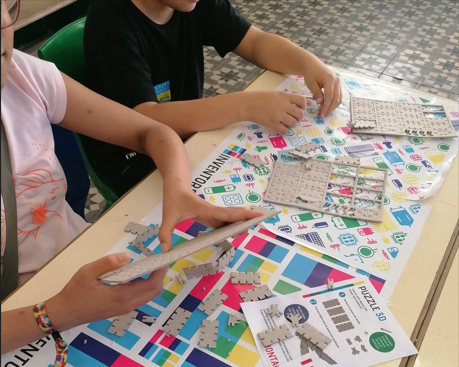
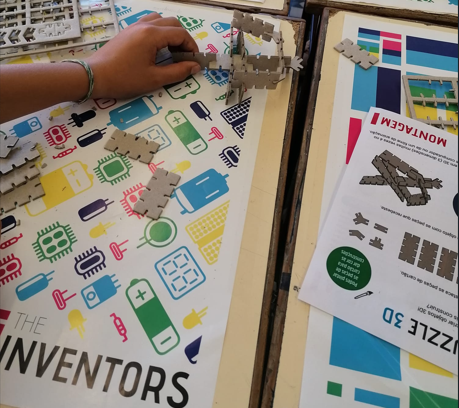
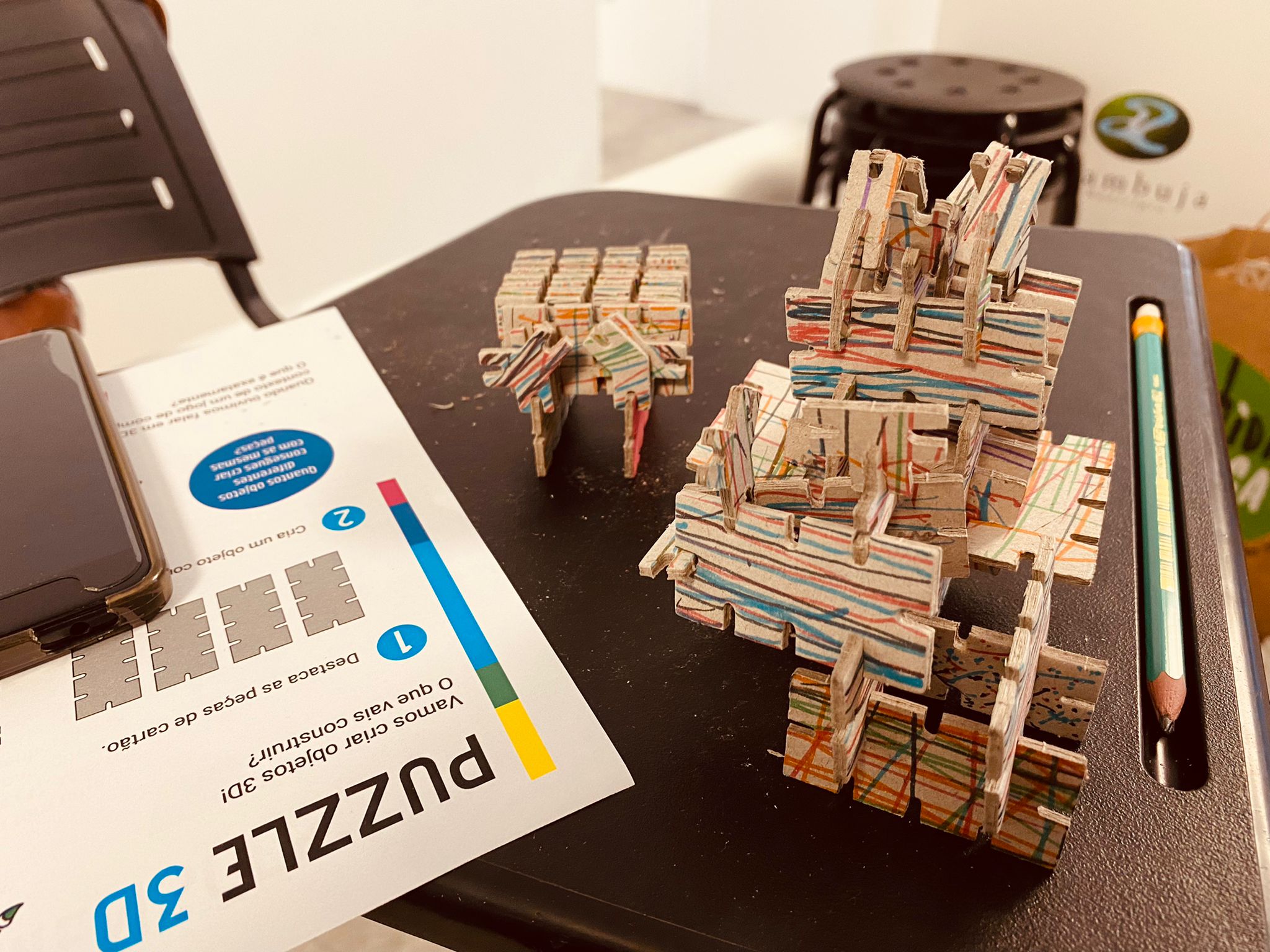
The 3D Puzzle experience is a hands-on activity that enables students to learn about three-dimensionality. During the experience, they will build a 3D Puzzle.

This activity allows children to grasp important scientific concepts, explored by many pioneers of science, in a practical and enjoyable context. It encourages them to explore the world around them with an inventive mindset. This reflects the mission of inspiring future inventors to think “outside the box” and to apply their knowledge in innovative ways.

About Inspiring Inventors

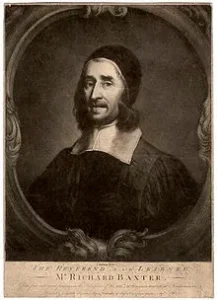
John Spilsbury

John Spilsbury

1739-1769

He was a British cartographer. He is recognised as the inventor of puzzles. Spilsbury created them for educational purposes and called them “Dissected Maps”. He made the first puzzle in 1766 as an educational tool to teach geography. He mounted a world map on a wooden board and cut out each country to create the first puzzle. Realising the business opportunity, he went on to produce puzzles on eight themes – the World, Europe, Asia, Africa, America, England and Wales, Ireland, and Scotland.

Ask John Spilsbury

The IA version of John Spilsbury your questions

This dialogue box uses artificial intelligence and is configured to respond exclusively to questions related to the project, its concepts and associated fields, as well as queries and curiosities about the history of each inventor. Questions outside this scope may not be answered. Always use under adult supervision.

Thank you for your understanding.


Concepts covered

Three-dimensionality

  • Three-dimensionality: It is the characteristic of something that exists or is represented in three dimensions: height, width, and depth. It differs from two-dimensionality, which has only height and width (like a drawing on paper).

Why This Project?

The 3D Puzzle project was created with three main objectives:

Understanding the importance of concepts: Enabling young inventors to learn ideas associated with the 3D universe, culminating in the creation of a 3D Puzzle.

Explaining its relevance today: Showing young inventors that three-dimensionality has enabled advances in areas such as medicine (imaging), engineering (3D modelling), cinema (3D films), and cartography (representing terrain).

Focus on Creativity and Inventive Spirit: By taking part in this process, children develop skills such as problem-solving, critical thinking, and motor coordination.

At the end of the session, in addition to building a 3D Puzzle, young inventors will also gain a new appreciation for the 3D universe.

Together, let’s give shape to creativity!

Challenges for you

Ask your little inventor what excited them most about the session, or challenge them to try out the 3D Puzzle together as a family!

For the more adventurous, how about sharing your family’s three-dimensional creation with us on social media?

Link para o Instagram


Let’s transform imagination into something solid.