fbpx
Play video

We are conducting electricity.

The Conductive Playdough project allows children to have fun while learning about the fascinating world of eletricity

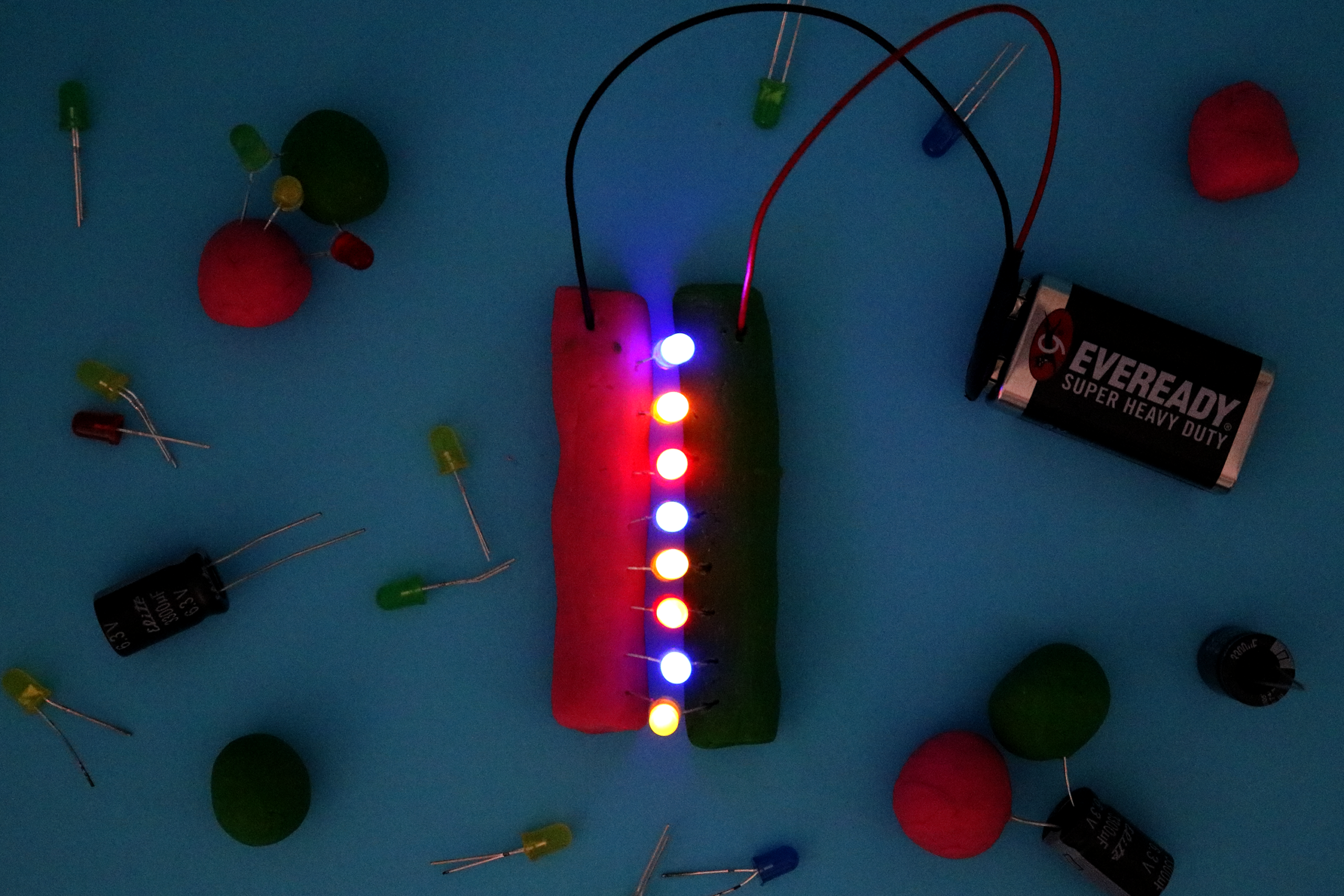
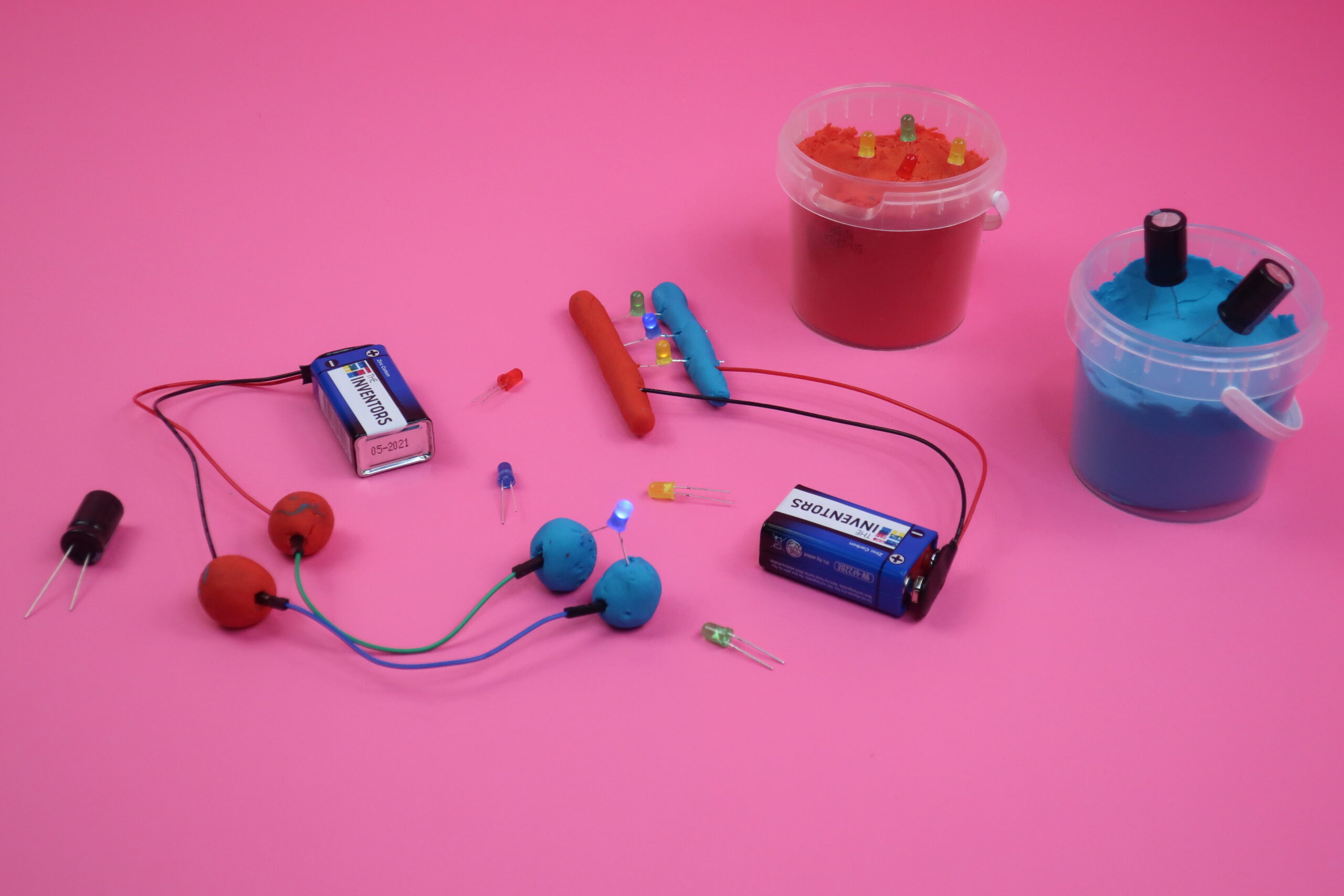
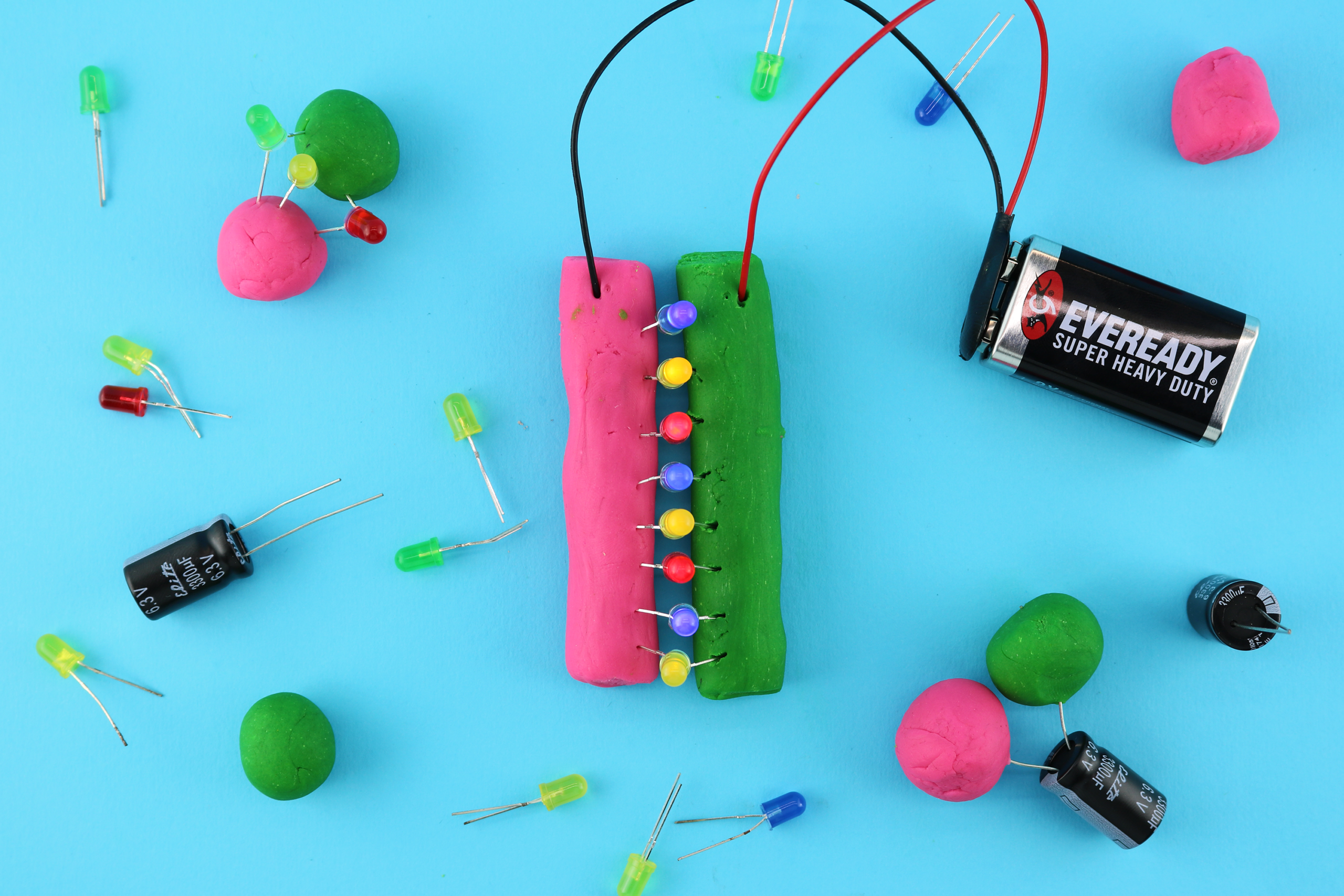
In Conductive Playdough, young inventors build real electrical circuits with LEDs, buzzers, capacitors, and batteries — all using playdough that conducts electricity!

This experience allows children to learn important  scientific concepts, that have been explored by many pioneers of science, in a practical and enjoyable context, encouraging them to explore the world around them with an inventive mindset. This reflects the mission of inspiring future inventors and innovators to think outside the box and apply their knowledge in innovative ways.


About Inspiring Inventors

Michael Faraday

Michael Faraday

1791-1867

Was an English chemist and physicist who contributed to the study of electrochemistry and electromagnetism. His main discoveries include the principles underlying electromagnetic induction, diamagnetism, and electrolysis. Although Faraday received little formal education, as a self-made man, he was one of the most influential scientists in history. It was by his research on the magnetic field around a conductor carrying a direct current that Faraday established the concept of the electromagnetic field in physics

Ask Elsie MacGill

The IA version of Michael Faraday answer your questions

This dialogue box uses artificial intelligence and is configured to respond exclusively to questions related to the project, its concepts and associated fields, as well as queries and curiosities about the history of each inventor. Questions outside this scope may not be answered. Always use under adult supervision.

Thank you for your understanding.


Concepts covered

Conductive Plasticine

  • Conductive Plasticine:  It can carry electricity! It’s made with special stuff that lets electricity flow through it, just like how water flows through a hose. This makes it super fun to use for building electric circuits and seeing how electricity works!

Series Circuit and Parallel Circuit

  • Series Circuit: When two LEDs are connected sequentially, they are in series. An example of a series circuit is the Christmas tree lights: when one bulb burns out, the circuit opens, and the remaining bulbs go out. In a series circuit, the current is grouped and passes from LED to LED. Therefore, if we remove one LED, the circuit is interrupted, and all the remaining LEDs go out.


  • Parallel Circuit: When two LEDs have both terminals connected to a given source (voltage or current), they are in parallel. An example of a parallel circuit is the electrical system in our house: when a bedroom light bulb burns out, the kitchen refrigerator stays on. In a parallel circuit, the current from the battery is distributed among each LED. Therefore, you can remove any one of the LEDs, and the remaining ones stay on.

Why This Project?

The Conductive Playdough project was created with three main objectives:

  1. Understanding the importance of concepts: Enabling young inventors to learn about the scientific concepts of electricity means understanding that electricity flows through materials able to carry a charge – these are called conductors!
  2. Explaining the relevance on nowadays: Explain to the young inventors that the control and manipulation of electricity are at the heart of future innovations, such as renewable energy devices, electric vehicles, and even technologies based on artificial intelligence. Understanding circuits is essential for the development of new, more efficient, and sustainable electronic devices.
  3. Focus in Creativity and an Inventive Spirit: By taking part in this  process, children develop skills such as problem-solving, critical thinking, and motor coordination.

At the end of the session, in addition to building a Conductive Playdough circuit, the young inventors will also gain a new appreciation for the world of electricity and how it continues to inspire new technologies

Let’s power the future through science – together!

Challenges for you

Ask your young inventor what excited them most about the session, or challenge them to use the Conductive Playdough circuit at home with the family!

For the boldest ones, why not share your experience with us, so we can share it on our social media?

Link para o Instagram


Together, let's play with electricity