fbpx
Reproduzir vídeo

An experiment with a purpose... and a buzz!

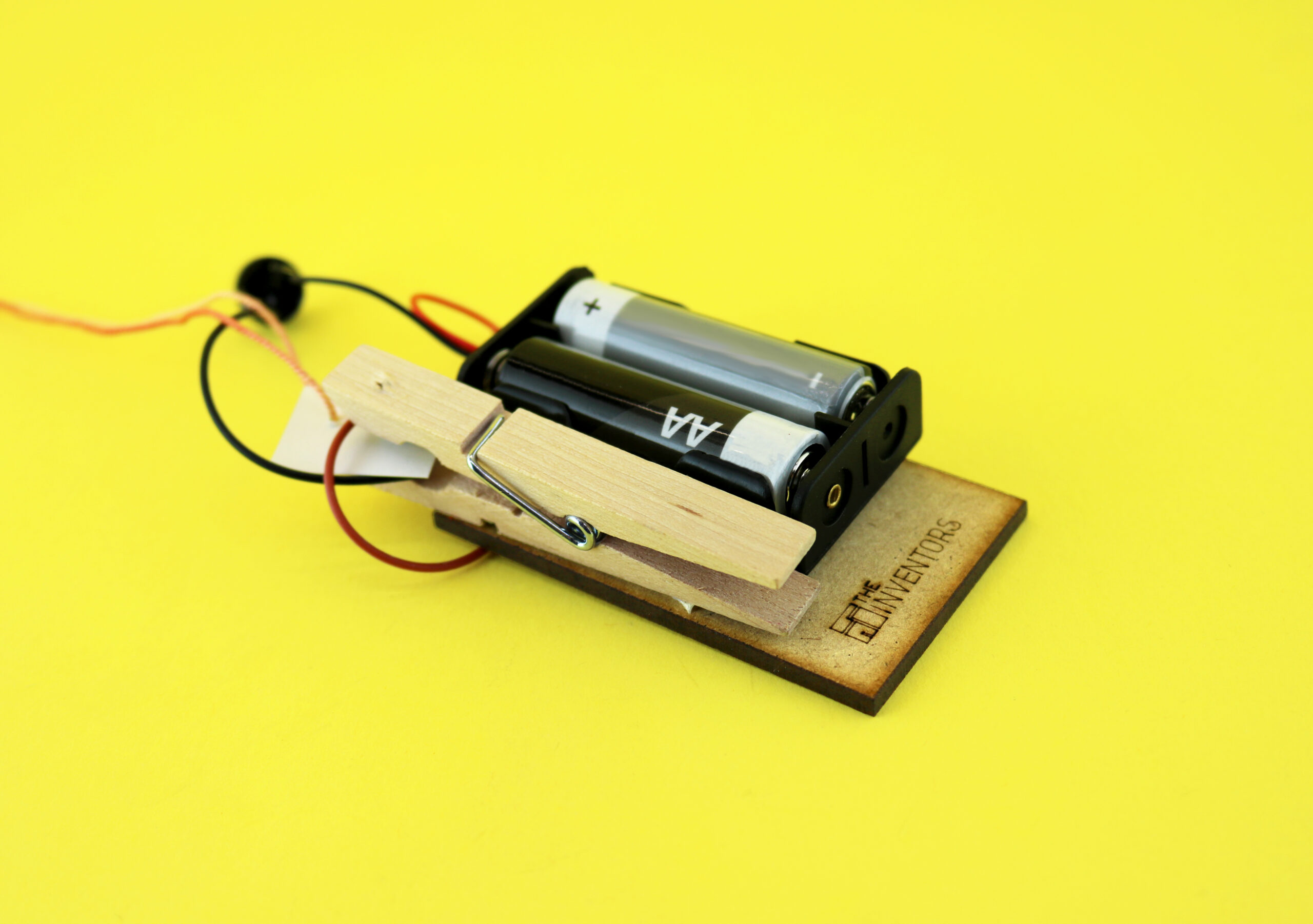
The Spring Alarm project offers a fun and hands-on way to learn the basics of electronics!

This experience invites young inventors to create a device called the Spring Alarm, based on a variety of electronic concepts!

The activity sparks children’s curiosity and creativity about the world of electronics. It allows them to learn, in a practical and engaging way, concepts created by many pioneers of science, encouraging them to explore the world around them with an inventive mindset.

This reflects the mission of inspiring future inventors to think “outside the box” and to apply their knowledge in creative and innovative ways.


AboutInspiring Inventors

Hertha Ayrton

Hertha Ayrton

1854-1923

She was a remarkable British scientist, engineer, mathematician, and inventor, as well as a women’s rights activist. A prominent figure in the history of science and gender equality, she broke many barriers at a time when female participation in science was extremely limited. She stood out for her groundbreaking work on electric arcs, a type of electrical discharge used in lighting and welding. In 1906, she became the first woman to receive the Hughes Medal from the Royal Society, in recognition of her research on electric arcs and the ripple patterns formed in materials such as sand and water.

AskHertha Ayrton

The IA version of Hertha Ayrton answer your questions

This dialogue box uses artificial intelligence and is set up to respond exclusively to questions related to the project, its concepts and associated fields, as well as doubts and curiosities about the history of inventors. Questions outside this scope may not be answered.

Always use under adult supervision!

Thank you for your understanding.


Concepts Covered

Alarm and Buzzer

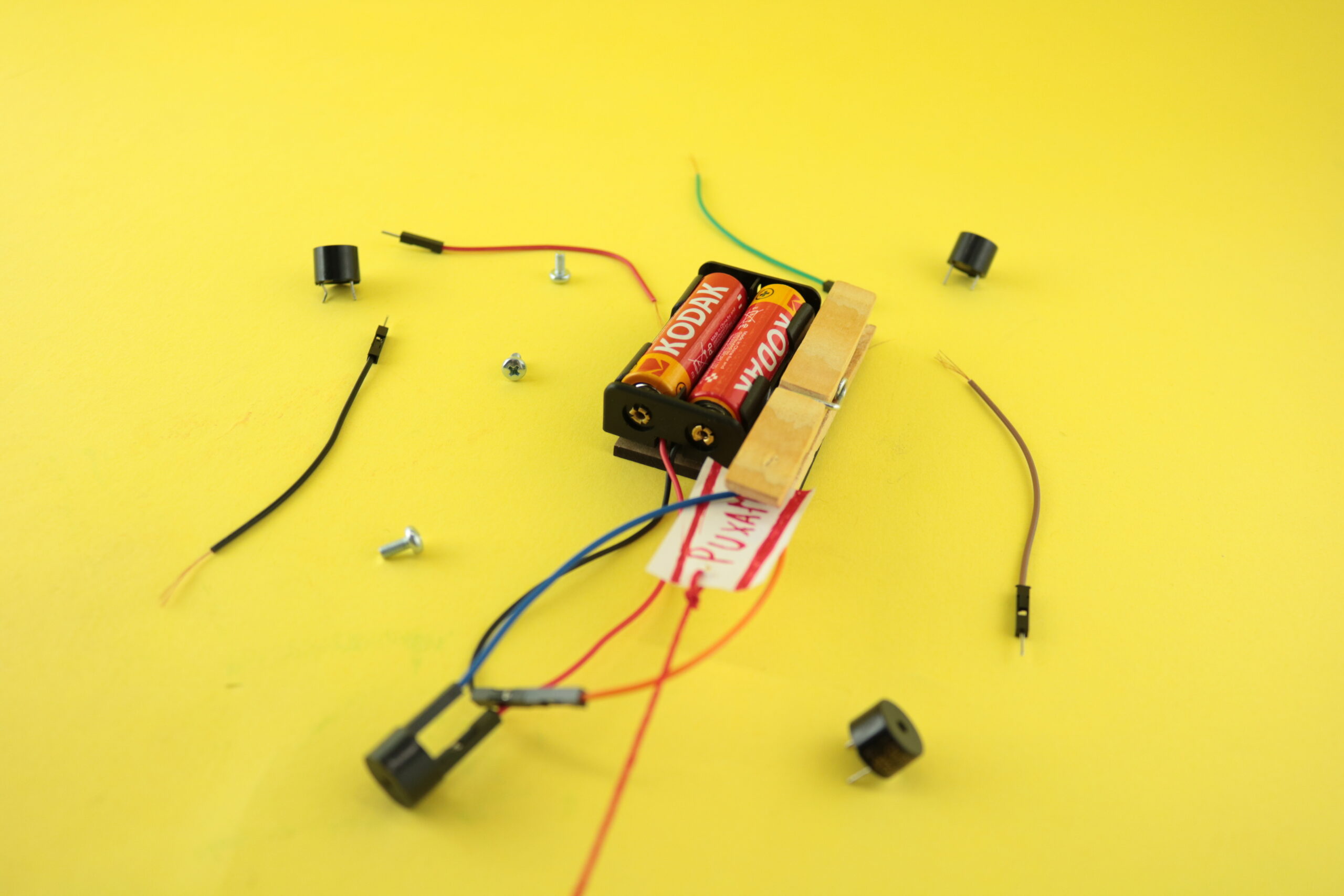
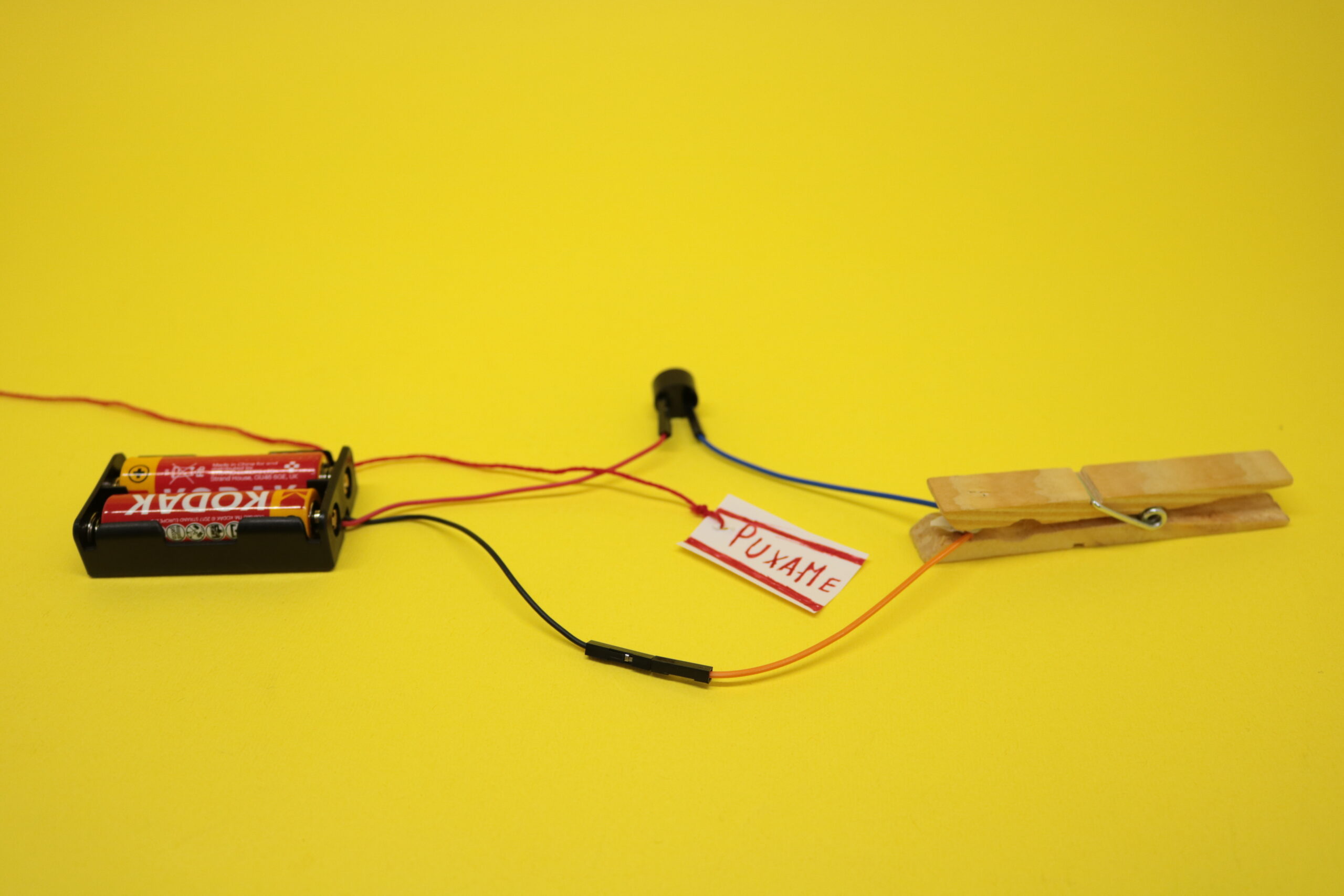
Alarm: A security device that emits a signal when triggered! In the Spring Alarm project, the signal is a sound, produced by the buzzer.

Buzzer: This component, when powered by a source (in this case, the battery), emits a sound signal.

Condutive Wire and Open/Closed Circuit

Conductive Wire: Made of metal—usually copper—and coated with plastic or rubber, these wires allow electric current to pass through easily.

Open/Closed Circuit: Electric current is a flow of electrons. For them to move, there must be no interruptions in their path (an open circuit). In this project, while the pieces of conductive tape are not touching, the circuit remains open and the alarm does not sound. As soon as the card is removed from between them, the circuit closes and activates the alarm: the buzzer sounds!

Why this project?

The Spring Alarm project was created with three main goals:

  1. Understanding key concepts: In this project, young inventors gain awareness of the usefulness of concepts such as open and closed circuits, conductive wires, and buzzers!
  2. Recognising Real-World impact: Through the Spring Alarm, young inventors discover how these concepts apply to real-life situations—like security alarms, communication systems, and even emerging technologies!
  3. Fostering creativity and inventive thinking: By taking part in this process, young inventors develop key skills such as problem-solving, critical thinking, and hand-eye coordination. In the end, playing with the Spring Alarm makes the whole experience even more special.

By the end of the session, young inventors gain a new appreciation for the world of electronics.

Together, we discover how electronics can be the perfect alarm for curiosity!

Challenges for you

Ask your young inventor what excited them most during the lessons — or try out the Spring Alarm together as a family!

For the more adventurous ones, why not share the impact of those moments with us on social media?

Link para o Instagram


Let’s spark our creativity with electronics – together!